Chemical Kinetics
172 questions · Click an option and press Check Answer to reveal the result
t₁/₂ C₀
t₁/₂ 1/C₀
t₁/₂ C₀²
t₁/₂ 1/C₀²
In a certain gaseous reaction between X and Y ; X + 3Y → XY₃
The initial rates are reported as follows –
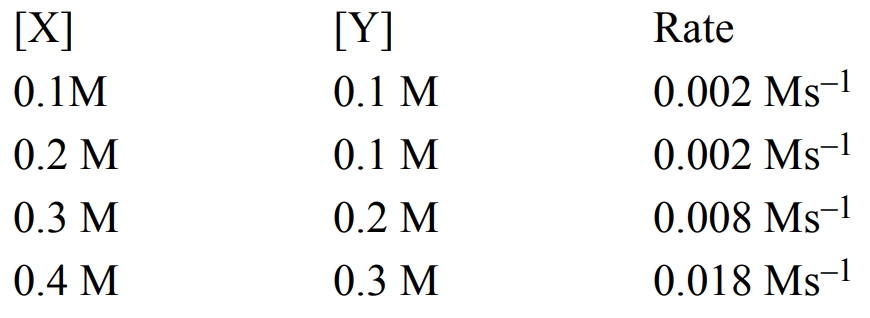
The rate law is -
Temperature coefficient =
.
.
\frac{k_{35^\circ}}{k_{34^\circ}}>1, this means that –
Reaction : 2Br- + H₂O₂ + 2H+ → Br₂ + 2H₂O take place in two steps :
(i)
(ii)
The order of the reaction is —
For the reaction NO₂ + CO → CO₂ + NO the experimental rate expression is
− dc/dt = k[NO₂]². The number of molecules of CO involved in the slowest step will be —
.
.
.
.
For the reaction A → B, data of initial concentration and corresponding half life period are given in the tabular form –
[A] 1M 2M 4M
T1/2 300s 600s 1200s
The order of the reaction is –
For the reaction 2H₂ + 2NO → N₂ + 2H₂O
the following mechanism has been proposed-
(i) 2NO ⇌ N₂O₂ (fast)
(ii) N₂O₂ + H₂ → N₂O + H₂O (r.d.s)
(iii) N₂O + H₂ → N₂ + H₂O (fast)
then what will be the rate law of this reaction?
For consecutive reaction
k₁ << k₂ << k₃. order of reaction will be
What is the order of a reaction whose rate law is
The instantaneous rate of disappearance of the MnO₄- ion in the following reaction is 4.56 × 10⁻³ Ms⁻¹. 2MnO₄- + 10 I- + 16H⁺ → 2Mn²⁺ + 5I₂ + 8H₂O The rate of appearance of I₂ is -
For the decomposition of N₂O₅ at a particular temperature, according to the equation :
2N₂O₅ → 4NO₂ + O₂
N₂O₅ → 2NO₂ + 1/2 O₂
the activation energy are E₁ & E₂ respectively, then
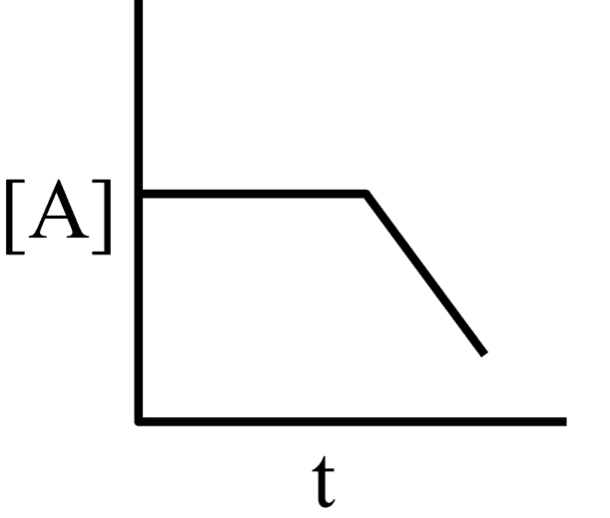
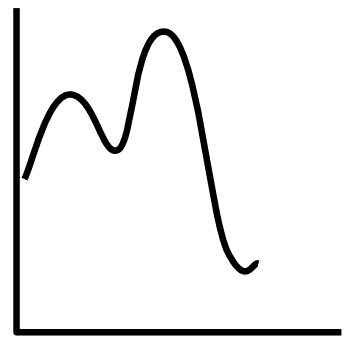
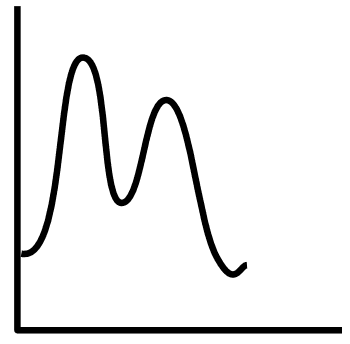
Which curve represents zero order reaction ?
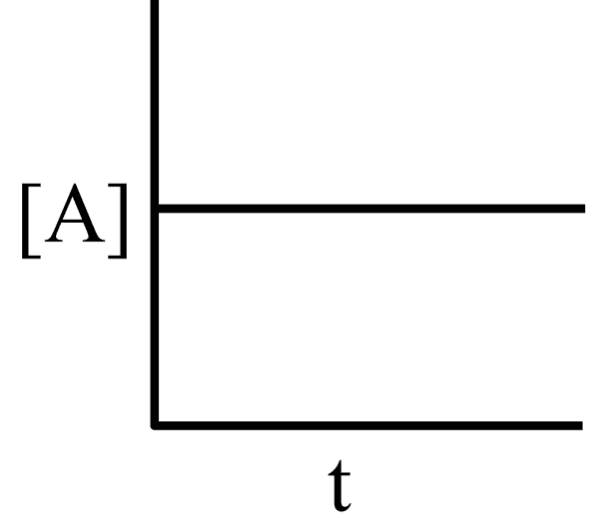
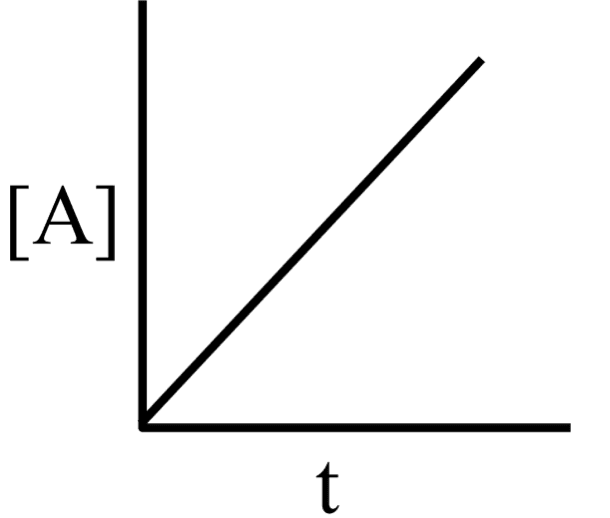
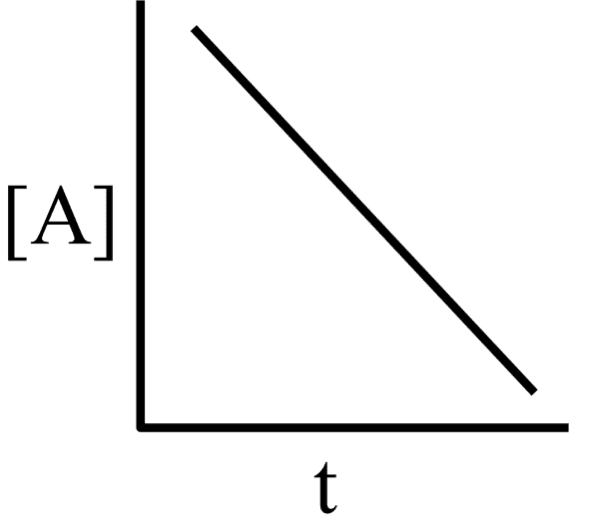
For Ist order reaction 2x(g) → 3y(g) + 2z(g)
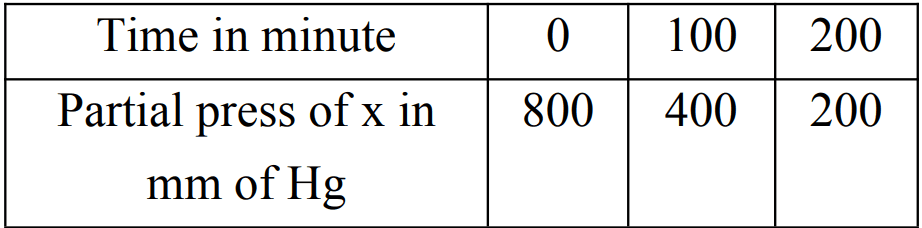
Assuming ideal nature of gas, time taken for 75% completion of reaction will be
A following mechanism has been proposed for a reaction -
2A + B → D + E
A + B → C + D (slow)
A + C → E (fast)
The rate law expression for the reaction is -
What is the order of a chemical reaction A + 2B →C, if the rate of formation of 'C' increases by a factor of 2.82 on doubling the concentration of 'A' and increases by a factor of 9 on tripling the concentration of 'B'–
A hypothetical reaction A₂ + B₂ → 2AB follows the mechanism as given below -
A₂ ⇌ A + A (fast)
A + B₂ → AB + B (slow)
A + B → AB (fast)
The order of the over all reaction is -
For the reaction ; 2HI → H₂ + I₂, the expression
. represents -
Which of the following graph is correct for the reaction :
A + B → C + D + 100 K cal -
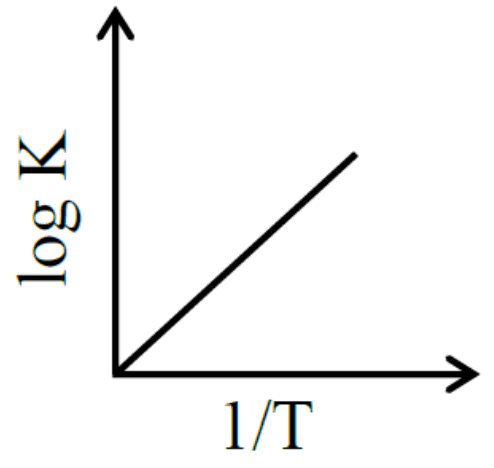
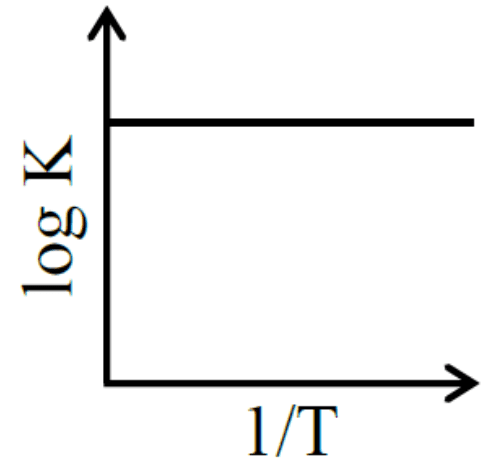
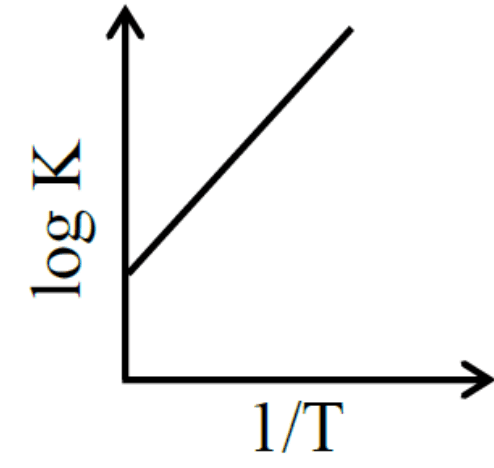
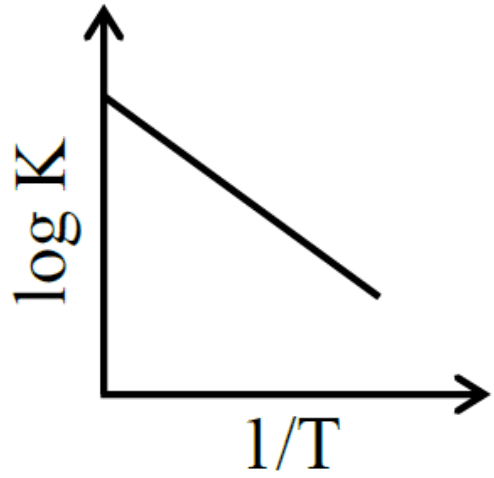
For a reaction 3A → products, it is found that the rate of reaction doubles, if concentration of A is increased four times, calculate order of reaction
1
1/2
2
3
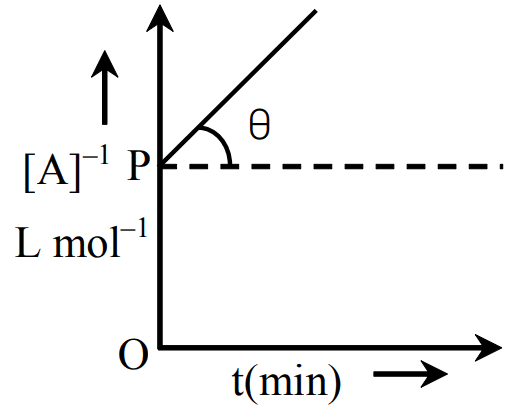
For a second order reaction, the graph plotted between [A]⁻¹ and time 't' is shown below - θ = tan⁻¹ (0.5) and OP = 2L mol⁻¹. Thus rate of the reaction at start is –
Consider the plots given below, for the type of reaction nA ⟶ B + C
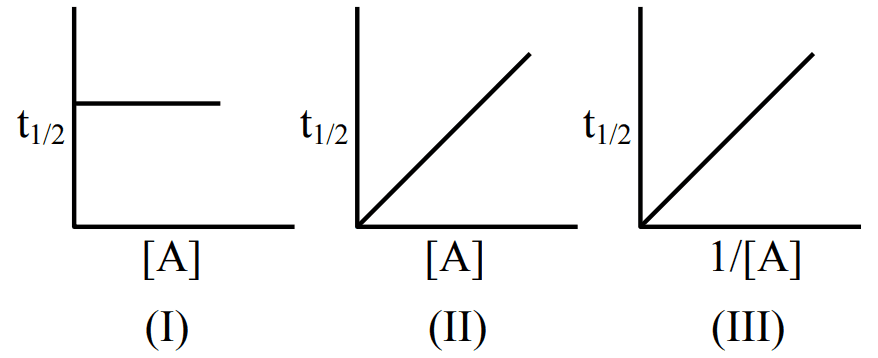
These plots respectively corresponds to the reaction order
For a reaction AB₅ → AB + 4B The rate can be expressed in following ways So the correct relation between K and K₁ is-
The rate of certain hypothetical reaction A + B + C → products, is given, by The order of reaction is given by -
Consider a reaction A → B + C. If the initial concentration of A was reduced from 4 M to 2 M in 1 hour and from 2 M to 1 M in 0.5 hour, the order of the reaction is-
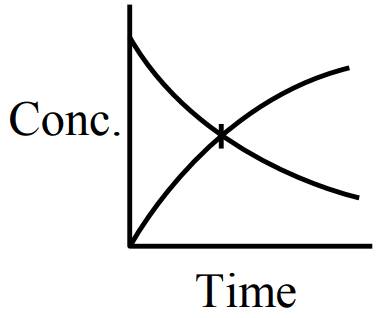
Figure depicts the change in conc. of species x & y for reaction 2x → y, as a function of time the point of inter section of two curves represents
t1/2
t1/3
t1/4
t2/3
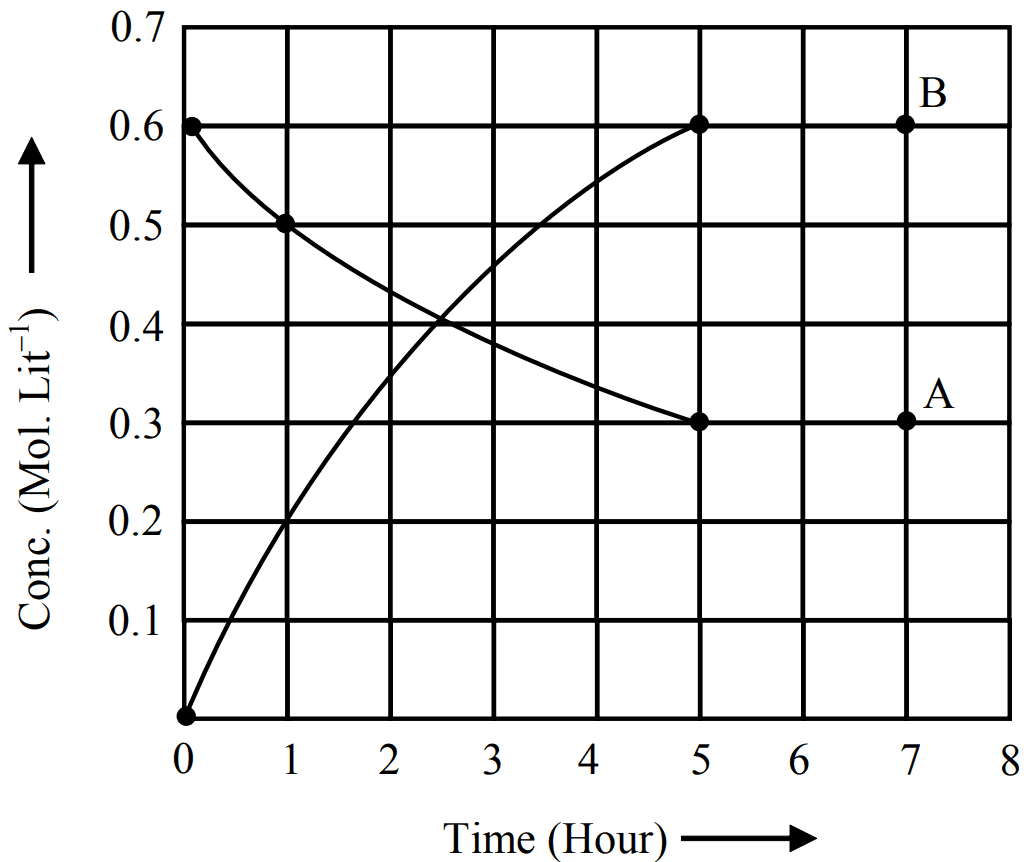
The progress of the reaction A ⇌ nB, with time is represented by the graph given below- The value of n is
The following data pertain to reaction between A and B :
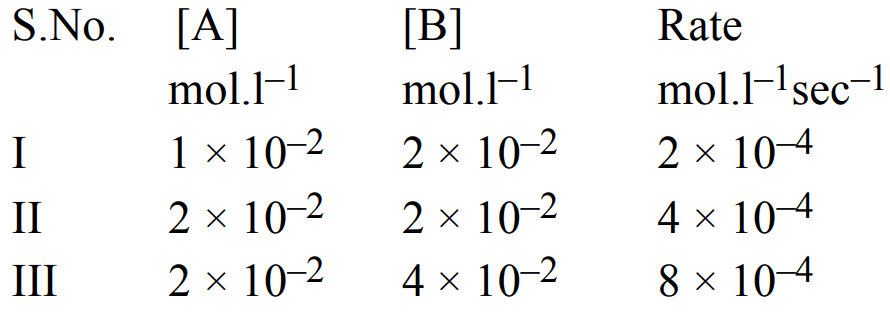
Which of the following conclusions can be drawn from the above data —
(a) Rate constant of the reaction 10-4
(b) Rate law of the reaction is k[A][B]
(c) Rate of reaction increases four times on doubling the concentration of both the reactant,
Select the correct answer – codes :–
What is the activation energy for a reaction if its rate doubles when the temperature is raised from 20°C to 35°C ? (R = 8.314 J mol–1 K–1)
15.1 kJ mol–1
242 kJ mol–1
269 kJ mol–1
34.7 kJ mol–1
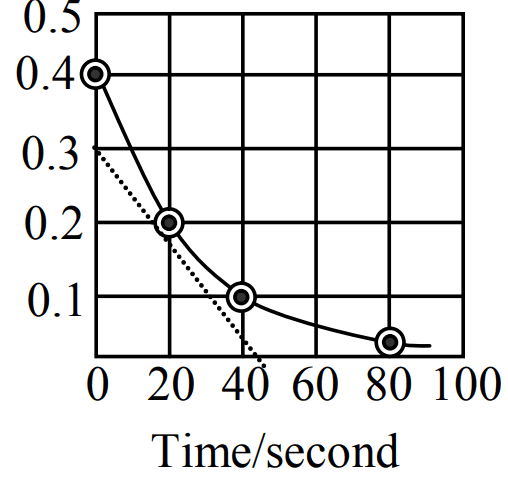
A reaction follows the given concentration (C) vs time graph. The rate for this reaction at 20 seconds will be –
A reaction takes place in three steps. The rate constants are k₁, k₂ and k₃. The over all rate constant . If (energy of activation) E₁, E₂ and E₃ are 60, 30 and 10 kJ. The overall energy of activation is –
A reaction rate constant is given by : . It means –
an-1
a1-n
an+1
In the reaction : A + 2B + C → D + 2E
The rate of reaction remains unchanged if the conc. of B is doubled and that of A and C is kept constant. What is the order with respect to B —
The chemical reaction 2O₃ → 3O₂ proceeds as follows -
O₃ ⇌ O₂ + O ............(fast)
O + O₃ → 2O₂ ............(slow)
The rate law expression should be -
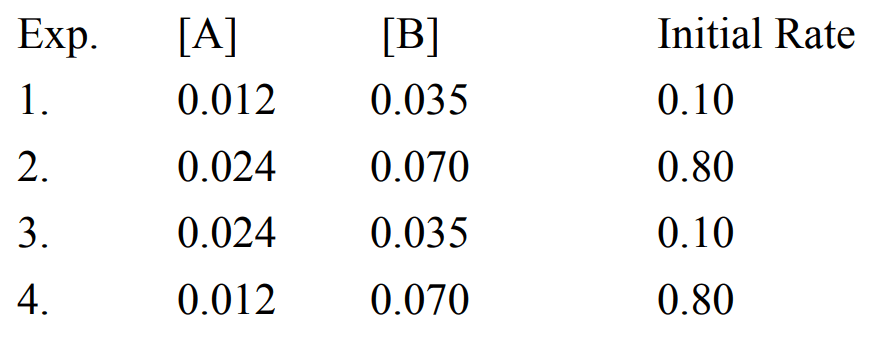
Select the rate law that corresponds to the data shown for the reaction A + B → C
The t1/2 for the first order reaction,
PCl₅(g) ⟶ PCl₃(g) + Cl₂(g) is 20 min. The time in which the conc. of PCl₅ reduces to 25% of the initial conc. is close to-
t1/2 = constant, confirms the order of the reaction as one. a²t1/2 = constant confirms that the reaction is of –
In the formation of sulphur trioxide by the contact process,
2SO₂ (g) + O₂ (g) ⟶ 2SO₃ (g)
The rate of reaction is expressed as − d(O₂)/dt = 2.5 × 10⁻⁴ mol L⁻¹ sec⁻¹
The rate of disappearance of (SO₂) will be -
For a hypothetical reaction A → L, the rate expression is-
A reaction takes place in various steps. The rate const. for 1st, 2nd, 3rd & 5th steps are k₁,k₂, k₃ & k₅ resp. The overall rate constant is given by . If activation energy are 40, 60, 50 & 10 kj/mole resp. The overall energy of activation (kJ/mole) is -
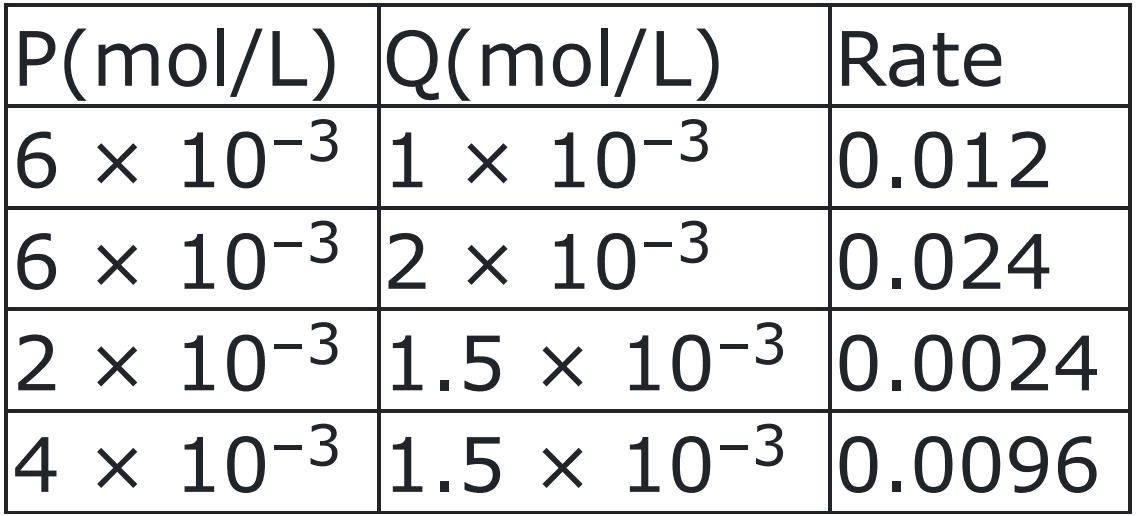
For a reaction 2P + Q → S, following data were collected. Calculate the overall order of the reaction.
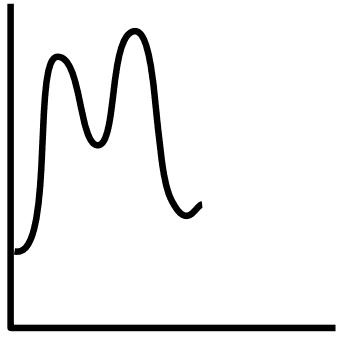
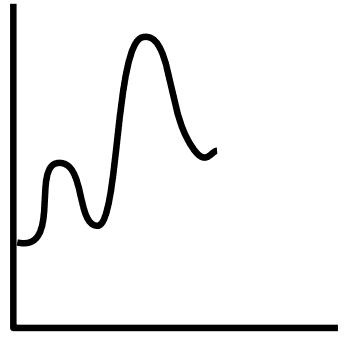
The reaction L → M is started with 10 gm of L. After 30 & 90 min. 5gm & 1.25 gm of L are left respectively. The order of reaction is
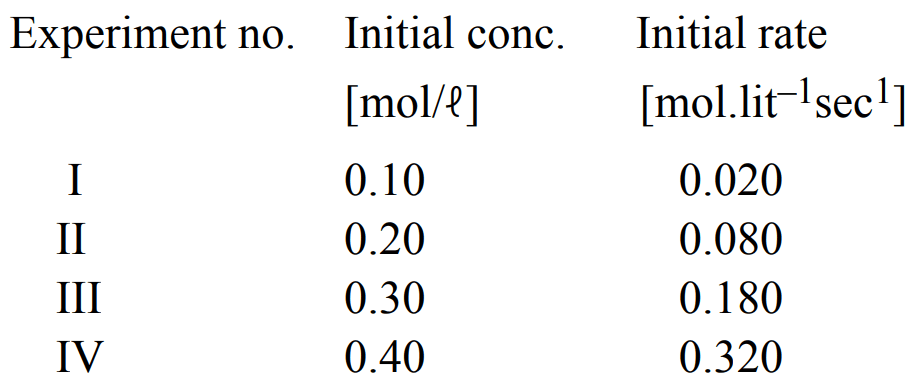
Using the data given below the order and rate constant for the reaction :
CH₃CHO(g) → CH₄(g) + CO(g)
.
.
.
In the following reaction : x A→yB
where −ve sign indicates rate of disappearance of the reactant. Thus, x : y is –
log4/3
log 3/4
log 4
log 3
.
.
.
For a gaseous reaction, following data is given
the temperature at which k1 = k2 is
1000 K
2000 K
868.82 K
434.2 K
In the following reaction A →B + C, rate constant is 0.001 M/sec. If we start with 1M of A the conc. of A & B after 10 min are respectively
For a reaction, the rate constant is expressed as, k = A.e(-40000/T)
The energy of the activation is -
.
.
.
.
A reaction A₂ + B₂ → 2AB occurs by the following mechanism -
A₂ → A + A ........(slow)
A + B₂ → AB + B ......(fast)
A + B → AB ........(fast) its order would be -
Consider the data given below for hypothetical reaction A → X.
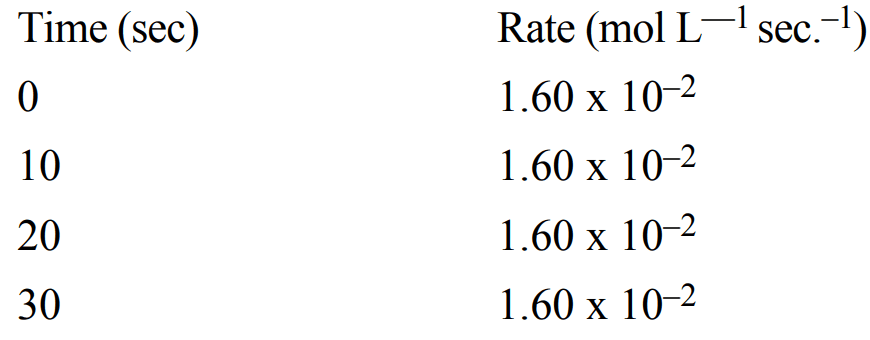
From the above data, the order of reaction is-
A first order reaction takes 69.3 minute for 50% completion. How much time will be needed for 80% completion -
161 min
171 min
151 min
181 min
In acidic medium, the rate of reaction between (BrO₃)- and Br- ion is given by the expression : − it means -